
In January 2026, HMRC collected £16.9 billion in capital gains tax from UK property owners. That is 69% more than the same month last year, and much of it came from landlords who sold in a hurry without understanding what they were walking into. With CGT at 24% and the annual tax-free allowance down to just £3,000, a poorly timed exit can cost tens of thousands of pounds that could have been avoided with the right planning.
What Has Actually Changed
Two things have shifted, and together they hit harder than most landlords realise:
- CGT rate: 18% for basic-rate taxpayers, 24% for higher-rate taxpayers
- Annual Exempt Amount: slashed from £12,300 in 2022 to just £3,000 today
- 60-day rule: CGT on a residential property disposal is due within 60 days of completion, not at self-assessment
The reduction in the Annual Exempt Amount alone means you are now paying CGT on roughly £9,300 more of every gain than you were three years ago. At 24%, that is an extra £2,232 per disposal before you even think about the rate itself.
What a Poorly Planned Exit Actually Costs
Take a straightforward example: a property bought for £150,000 and sold for £290,000.
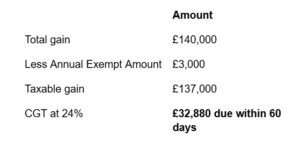
With the right planning in place before exchange, that number could look very different.
Strategies Worth Discussing With Your Accountant
None of the following is personal advice, but these are the conversations that organised investors are already having:
- Use your spouse or civil partner’s allowance — joint ownership means two Annual Exempt Amounts and potentially two different rate bands
- Stagger disposals across tax years — selling two properties in the same year stacks gains and pushes more into the 24% band
- Make a pension contribution — this reduces your taxable income and can move part of the gain back into the 18% basic-rate band
- Offset capital losses — losses on other assets, or carried forward from previous years, can be set against your property gain
- Check Principal Private Residence Relief — if you ever lived in the property as your main home, part of the gain may be exempt
Before You Sell: Is Holding the Better Option?
This question does not get asked often enough. With CGT at 24% and the exemption at its lowest in years, a poorly timed disposal can wipe out years of capital growth in a single transaction.
Landlords considering selling because margins have tightened under Section 24, or management has become more demanding since the Renters’ Rights Act, are often not seeing the full picture. Sometimes the issue is not the asset. It is the strategy around it.
Short-term accommodation, supported living, and corporate lets can generate substantially higher monthly income from the same property, without triggering a disposal and a five-figure tax bill.
How We Can Help
At Coventry Accommodation, we work with landlords and investors across Coventry and Warwickshire through fully managed, hands-off rental solutions including short-term accommodation and supported living.
If you are weighing up whether to sell or hold, we are happy to have a practical conversation about what your property could realistically generate under the right management model before you make a decision that cannot be undone.
Get in touch here or call 0247 695 1995.
 Book your free 15-minute property business review here:
[Booking Link]
Disclaimer: This article is for general informational purposes only and does not constitute tax, legal, or financial advice. Rates and allowances are based on the 2025/26 tax year and are subject to change. Always consult a qualified accountant or tax adviser before making any disposal decisions.